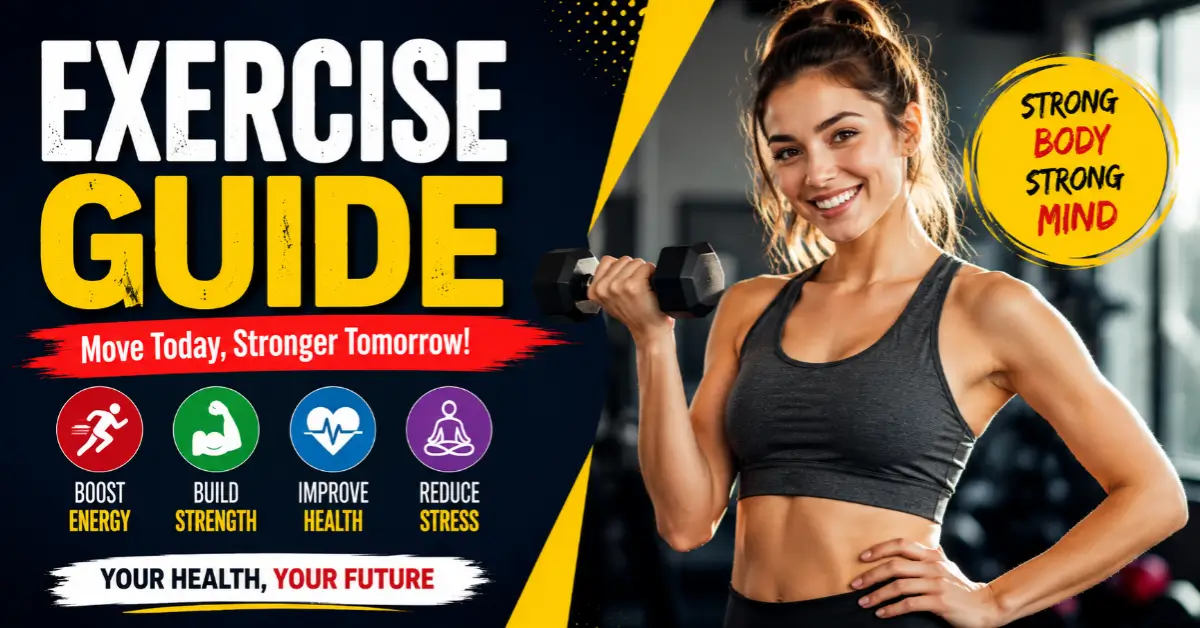
Exercise is one of the most powerful investments you can make in your health. It improves your heart, strengthens muscles, supports mental well-being, increases energy, and lowers the risk of many chronic diseases. This exercise guide is designed to help beginners and experienced individuals understand how regular movement can become part of a healthier lifestyle without requiring expensive equipment or complicated workout plans.
Many people believe exercise only means spending hours in a gym, but that’s far from the truth. Walking through your neighborhood, climbing stairs, cycling, stretching, bodyweight workouts, swimming, or even gardening all count as physical activity. The goal isn’t perfection—it’s consistency. Small amounts of movement performed regularly often produce greater long-term benefits than occasional intense workouts.
- Supports heart and lung health.
- Builds strength and endurance.
- Improves mood and reduces stress.
- Helps maintain a healthy weight.
- Supports better sleep and higher energy.
- Suitable for every age with the right approach.
Why Exercise Matters at Every Stage of Life
Exercise benefits people of every age. Children develop stronger bones and coordination through active play, adults improve cardiovascular health and productivity, while older adults maintain balance, mobility, and independence through regular movement. Regardless of age, staying active helps the body function more efficiently and reduces the risk of many lifestyle-related diseases.
Physical activity also supports the immune system, improves circulation, and helps regulate blood pressure, blood sugar, and cholesterol levels. Even moderate exercise performed several times each week contributes to better long-term health outcomes.
One of the easiest ways to begin is by walking. Our guide on The Art of Walking explains how a simple daily walk improves heart health, mental well-being, and even personal relationships.
Physical Benefits of Regular Exercise
| Benefit | How Exercise Helps |
|---|---|
| Heart Health | Strengthens the cardiovascular system and improves circulation. |
| Muscle Strength | Builds stronger muscles and supports healthy joints. |
| Weight Management | Burns calories while improving metabolism. |
| Bone Health | Weight-bearing exercise supports stronger bones. |
| Energy Levels | Improves stamina and reduces fatigue. |
| Sleep Quality | Regular movement supports deeper, more restful sleep. |
Exercise doesn’t have to be complicated. Walking, bodyweight training, cycling, swimming, yoga, resistance training, and stretching all provide valuable health benefits when practiced consistently. Choosing activities you genuinely enjoy makes it much easier to maintain an active lifestyle over the long term.
If your goal is improving fitness while losing body fat, our detailed guide on Practical Guide to the Best Exercises for Weight Loss and Fitness explains which workouts provide the greatest overall benefits.
Exercise Supports Mental Well-Being
Regular physical activity benefits the brain just as much as the body. Exercise stimulates the release of endorphins and other natural chemicals that improve mood, reduce stress, and increase motivation. Many people report feeling calmer, more focused, and more productive after even a short workout.
Exercise also creates healthy routines that improve confidence and emotional resilience. Whether it’s a morning walk, a lunchtime stretch, or an evening workout, staying active provides a healthy break from daily stress and long hours of sitting.
Women often benefit from exercise programs designed around strength, flexibility, and long-term wellness rather than unrealistic fitness goals. Our article on Fitness for Women shares practical ideas for building sustainable fitness habits.
Creating an Exercise Routine That Lasts
The most effective workout plan is the one you can maintain consistently. Instead of exercising intensely for one week and stopping the next, begin with realistic goals that fit your schedule. Many experts recommend starting with 20 to 30 minutes of activity most days of the week before gradually increasing intensity or duration.
Building exercise into your daily schedule makes it easier to stay consistent. Our guide on How to Build a Daily Routine That Supports Your Health Goals explains simple strategies for turning healthy habits into part of everyday life.
Choosing the Right Type of Exercise
There is no single workout that is perfect for everyone. The best exercise is the one that matches your fitness level, health goals, age, and lifestyle. Some people enjoy brisk walking, while others prefer strength training, cycling, swimming, yoga, or home workouts. Combining different forms of exercise creates a balanced fitness routine that improves overall health.
| Exercise Type | Main Benefit |
|---|---|
| Walking | Improves heart health and endurance. |
| Strength Training | Builds muscle and strengthens bones. |
| Bodyweight Exercises | Improve functional strength without equipment. |
| Low-Impact Workouts | Protect joints while improving fitness. |
| Stretching & Mobility | Improves flexibility and reduces stiffness. |
If you’re unsure which workout fits your goals, our article on What Is the Best Type of Exercise for Weight Loss? compares different exercise styles and explains who benefits most from each one.
Building Strength Without a Gym
You don’t need expensive equipment or a gym membership to become stronger. Bodyweight exercises such as squats, push-ups, lunges, planks, and glute bridges train multiple muscle groups while improving balance and coordination. They can be performed almost anywhere and adjusted to match different fitness levels.
Home workouts are especially useful for beginners, busy professionals, and anyone who prefers exercising in a comfortable environment. Consistency is far more important than owning expensive equipment.
Our complete Daily Bodyweight Workout: Build Strength at Home Without Equipment guide shows how to create an effective routine using only your own body weight.
Exercise Tips for Beginners
- ✔ Begin with 20–30 minutes of activity.
- ✔ Warm up before every workout.
- ✔ Focus on proper form instead of speed.
- ✔ Drink enough water throughout the day.
- ✔ Schedule rest days for recovery.
- ✔ Increase intensity gradually.
- ✔ Stay consistent rather than aiming for perfection.
Many beginners worry about exercising too hard. Starting slowly reduces the risk of injury and builds confidence. Even small improvements each week lead to significant long-term progress.
If you have joint discomfort or are returning to exercise after a long break, our Low Impact Daily Workout Routine provides safe ideas that are easier on the knees, hips, and back.
People who have never exercised before may also enjoy our No Equipment Lazy Workout for Beginners at Home, which focuses on simple movements that can be done in a small space.
Frequently Asked Questions
1. How often should I exercise?
Most adults benefit from at least 150 minutes of moderate physical activity each week, combined with muscle-strengthening exercises on two or more days.
2. Is walking enough exercise?
Walking is an excellent starting point for most people. Combining walking with strength training and flexibility exercises provides even greater health benefits.
3. Can I exercise every day?
Yes, but vary the intensity. Alternate challenging workouts with lighter activities like walking, stretching, or yoga to allow your body to recover.
4. Do I need a gym membership?
No. Many effective workouts can be performed at home using bodyweight exercises, resistance bands, or simple household equipment.
Every Workout Is an Investment in Your Future
Exercise is more than a way to improve appearance—it’s one of the most effective habits for protecting long-term health. Regular movement strengthens the heart, builds muscle, improves mental well-being, increases energy, and supports a healthier future. Whether you begin with a short walk, a bodyweight workout, or a low-impact routine, every session moves you closer to better health. The most important step is simply getting started and making exercise a consistent part of your everyday life.