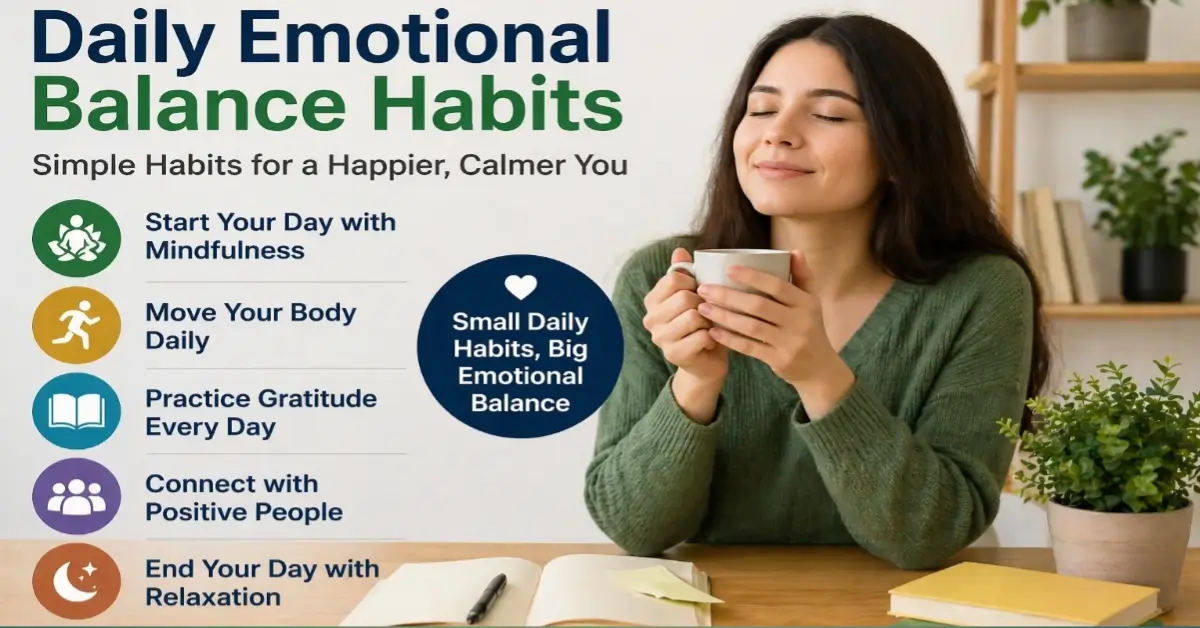
Daily Emotional Balance Habits: Simple Ways to Stay Mentally Strong Every Day
Daily emotional balance habits help people stay calm, focused, and emotionally stable in daily life. Modern routines are often full of pressure, stress, and constant thinking. Without emotional balance, even small problems can feel overwhelming. Emotional balance does not mean avoiding emotions, but understanding and managing them in a healthy way.
Many people ignore emotional health until stress turns into anxiety, burnout, or mental exhaustion. Practicing simple habits every day helps the mind stay steady during challenges. When emotional balance improves, decision-making becomes clearer and relationships also become healthier.
What Are Daily Emotional Balance Habits?
Daily emotional balance habits are small, consistent actions that help regulate emotions and thoughts. These habits include mindfulness, self-reflection, healthy routines, and emotional awareness. They are not complicated techniques but simple practices that fit into daily life.
Emotional balance develops gradually. It is built by observing emotions without reacting impulsively. When people understand their emotional patterns, they respond calmly instead of reacting with stress or anger. This creates inner stability over time.
Following daily emotional balance habits allows the mind to recover from stress faster. Instead of carrying emotional weight all day, people learn to release tension naturally. This balance supports mental clarity and emotional strength in the long run.
These habits also help people feel emotionally secure within themselves. When emotions are handled daily, they do not build up and explode later. Over time, people develop confidence in managing difficult feelings. Emotional balance habits create a sense of control, making life feel more manageable even during challenging situations.

Why Emotional Balance Is Important for Mental Wellbeing
Emotional imbalance slowly affects mental wellbeing. Constant stress can disturb sleep, concentration, and mood. Over time, emotional pressure may lead to anxiety or depression. Emotional balance protects mental health by creating inner calm.
People with emotional balance handle challenges with patience and clarity. They are less affected by sudden changes or negative situations. Emotional stability helps reduce overthinking and emotional exhaustion.
Early signs of emotional stress are often ignored. These signs are explained clearly in silent mental stress signs . Recognizing stress early helps prevent long-term mental health problems.
Emotional balance also improves resilience. When people remain emotionally stable, they recover faster from setbacks. Balanced emotions protect the mind from long-term damage caused by chronic stress and help maintain consistent mental performance.

Mindfulness as a Core Emotional Balance Habit
Mindfulness is one of the most effective daily emotional balance habits. It means paying attention to the present moment without judgment. Mindfulness helps reduce emotional reactivity and mental noise.
Simple mindfulness practices include deep breathing, short pauses, and awareness of thoughts. These practices calm the nervous system and improve emotional regulation. Even a few minutes daily can make a noticeable difference.
Mindfulness techniques are explained in detail in mindfulness for daily life . When mindfulness becomes a habit, emotional balance improves naturally.
Practicing mindfulness daily helps people slow down emotional reactions. Instead of reacting instantly, they gain time to respond calmly. This habit strengthens emotional control and creates inner peace that supports mental wellbeing.

Managing Stress Through Daily Emotional Balance Habits
Stress is part of life, but unmanaged stress damages emotional health. Daily emotional balance habits help manage stress before it becomes overwhelming. Healthy routines protect the mind from emotional overload.
Simple actions such as regular breaks, limited screen time, and physical movement reduce emotional pressure. Writing thoughts, talking openly, and resting properly also support emotional balance.
Stress management works best when combined with emotional awareness. Understanding personal stress triggers allows better emotional control and prevents burnout.
When stress is handled daily, it does not accumulate. Emotional balance habits release tension gradually, helping people stay mentally fresh and focused throughout the day.
Building Emotional Awareness and Self-Understanding
Emotional awareness is the ability to recognize feelings as they arise. Many people react emotionally without understanding what they feel. Emotional awareness helps pause reactions and choose better responses.
Daily emotional balance habits encourage self-reflection. Asking simple questions like “Why do I feel this way?” improves emotional understanding. This habit strengthens emotional intelligence.
Self-awareness helps people accept emotions without guilt. This acceptance reduces emotional conflict and improves mental peace over time.
As emotional awareness grows, people become more confident in expressing feelings. Clear emotional understanding improves communication and prevents misunderstandings in daily interactions.
Emotional Balance and Relationships
Emotional balance improves communication and relationships. When emotions are managed calmly, misunderstandings reduce and trust increases. Balanced emotions support healthy boundaries.
People with emotional stability listen better and respond thoughtfully. This improves family relationships, friendships, and work interactions.
Daily emotional balance habits help avoid emotional outbursts and long-term conflicts. Healthy emotional control supports strong social connections.
Balanced emotions also increase empathy. When people understand their own emotions, they better understand others, strengthening emotional bonds.
Long-Term Benefits of Emotional Balance
Long-term emotional balance improves mental strength, focus, and decision-making. Emotionally balanced people recover faster from stress and setbacks.
Balanced emotions also support physical health. Reduced stress improves sleep quality, immunity, and overall energy levels.
Practicing daily emotional balance habits consistently leads to a calmer, more confident, and mentally resilient life.
Over time, emotional balance becomes a natural part of daily living. People feel stable, focused, and emotionally secure even during difficult situations.
Conclusion
Daily emotional balance habits are essential for protecting mental wellbeing in modern life. Small daily actions create strong emotional stability over time.
By practicing mindfulness, emotional awareness, and healthy routines, people can manage stress, improve mood, and maintain long-term emotional balance.
Frequently Asked Questions
What are daily emotional balance habits?
Daily emotional balance habits are simple actions that help manage emotions, reduce stress, and maintain mental stability in everyday life.
Why are daily emotional balance habits important?
These habits help prevent emotional overload, improve mood, and support long-term mental wellbeing.
Can daily emotional balance habits reduce stress?
Yes, practicing daily emotional balance habits helps calm the mind and improves the body’s response to stress.
How does mindfulness support emotional balance?
Mindfulness increases emotional awareness and helps control reactions, which supports emotional balance and mental clarity.
How long does it take to see benefits?
Small improvements may appear within days, while long-term emotional balance develops through consistent daily practice.
Can emotional balance improve relationships?
Yes, emotional balance improves communication, patience, and understanding, leading to healthier relationships.


