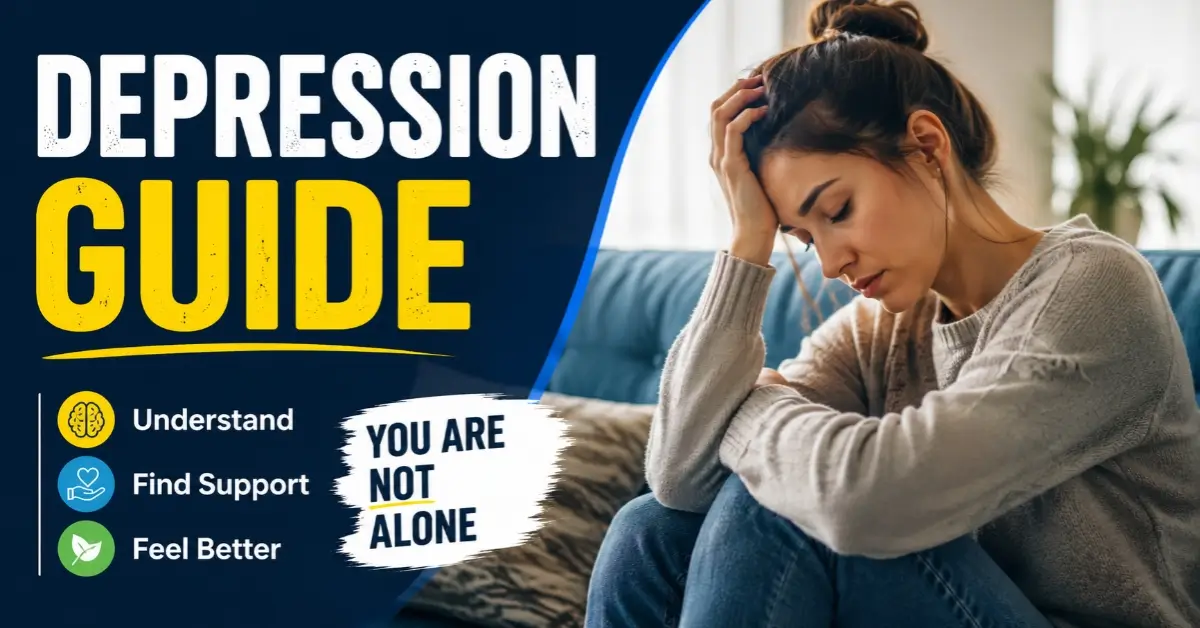
Depression is one of the most common mental health conditions in the world, yet it is also one of the most misunderstood. Many people think depression simply means feeling sad, but it is much more complex. It can affect the way a person thinks, feels, sleeps, eats, works, and interacts with family and friends. Depression may develop gradually or appear after a difficult life event, and without proper support it can interfere with everyday life.
This depression guide explains the symptoms, possible causes, treatment options, and healthy daily habits that may support recovery. Whether you’re experiencing depression yourself or trying to understand what someone else is going through, reliable information is the first step toward finding hope and professional help.
- Affects thoughts, emotions, and physical health.
- Can happen to people of any age.
- Early support often improves recovery.
- Treatment may include therapy, medication, or both.
- Healthy daily habits can support emotional well-being.
Understanding Depression Beyond Feeling Sad
Everyone feels sad, disappointed, or stressed from time to time. These emotions are a normal part of life and usually improve with time. Depression is different because the feelings are more intense, last much longer, and begin affecting daily responsibilities, relationships, work, or school.
Some people experience depression after losing a loved one, facing financial problems, living with a chronic illness, or going through major life changes. Others may develop depression without a single obvious reason. Genetics, brain chemistry, hormones, long-term stress, and environmental factors can all contribute.
Depression should never be viewed as a personal weakness. It is a recognized medical condition that deserves understanding, proper treatment, and compassion.
To understand the causes in greater detail, read our complete guide on Why Does Depression Occur and How to Control It, where we explain biological, psychological, and lifestyle factors that may contribute to depression.
Common Symptoms of Depression
Depression affects every person differently, but many people experience a combination of emotional, physical, and behavioral symptoms. Recognizing these early warning signs makes it easier to seek professional support before symptoms become more severe.
- Persistent sadness or emptiness.
- Loss of interest in hobbies and activities.
- Feeling hopeless or worthless.
- Low energy or constant fatigue.
- Difficulty concentrating or making decisions.
- Changes in sleep patterns.
- Changes in appetite or body weight.
- Feeling irritable or emotionally overwhelmed.
- Withdrawing from family and friends.
These symptoms should never be ignored, especially if they continue for several weeks or begin interfering with daily life. Seeking help early often leads to better outcomes.
Possible Causes and Risk Factors
| Risk Factor | How It May Contribute |
|---|---|
| Family History | Genetics may increase susceptibility. |
| Long-Term Stress | Continuous emotional pressure affects mental health. |
| Traumatic Life Events | Loss, abuse, or major life changes may trigger depression. |
| Chronic Medical Conditions | Living with long-term illness may increase emotional strain. |
| Social Isolation | Limited social support may worsen emotional well-being. |
| Poor Sleep | Sleep problems often contribute to emotional difficulties. |
Although some risk factors cannot be changed, many lifestyle habits can improve emotional resilience. Regular movement, healthy nutrition, quality sleep, stress management, and meaningful social connections all contribute to better mental well-being.
One of the simplest natural ways to improve both physical and emotional health is regular walking. Our article on The Art of Walking explains how daily walks can reduce stress, improve mood, strengthen relationships, and support long-term mental wellness.
Healthy Daily Habits That Support Emotional Well-Being
Professional treatment remains essential for many people living with depression, but healthy daily routines can provide valuable additional support. Small improvements practiced consistently often have a meaningful impact over time.
Maintaining a regular sleep schedule, eating balanced meals, limiting alcohol, staying physically active, spending time outdoors, practicing mindfulness, and talking openly with trusted family members or friends all help create a healthier foundation for emotional recovery.
Learning how to manage stress before it becomes overwhelming is equally important. Our guide on How to Avoid Tension shares practical techniques for reducing everyday stress and protecting long-term mental well-being.
Professional Treatment Options
Depression is a treatable medical condition, and there is no single treatment that works for everyone. Healthcare professionals develop treatment plans based on a person’s symptoms, overall health, medical history, and individual needs. Seeking professional support early often leads to better recovery and improves quality of life.
Common treatment options include:
- Psychological therapy such as Cognitive Behavioral Therapy (CBT).
- Prescription antidepressant medications when recommended by a qualified healthcare professional.
- Lifestyle changes that support emotional and physical well-being.
- Support groups where people share experiences and coping strategies.
- Stress management techniques and relaxation exercises.
It’s important to remember that recovery takes time. Some people improve within weeks, while others need longer-term care. Treatment should never be stopped or changed without speaking to a healthcare professional.
The Connection Between Physical and Mental Health
The body and mind constantly influence each other. Poor physical health can increase emotional stress, while depression may reduce motivation to stay active, eat nutritious foods, or maintain healthy routines. Breaking this cycle often begins with small, achievable changes.
Regular exercise has been shown to improve mood, increase energy, and reduce symptoms of anxiety and depression for many people. Even moderate activities such as walking, cycling, stretching, or light strength training may help support emotional well-being when practiced consistently.
Preventive health habits also contribute to better mental wellness. Our article on Health Protection Benefits explains how healthy daily choices support both physical and emotional resilience.
How Family and Friends Can Help
Support from loved ones often plays an important role in recovery. People living with depression may struggle to ask for help, making patience and understanding especially valuable.
- ✔ Listen without judging or interrupting.
- ✔ Encourage them to seek professional help.
- ✔ Stay in regular contact, even with short messages.
- ✔ Invite them for a walk or another gentle activity.
- ✔ Avoid telling them to “just be positive.”
- ✔ Be patient because recovery often takes time.
Sometimes simply knowing that someone cares can make a meaningful difference. Small acts of kindness, consistent support, and compassionate communication help people feel less isolated during difficult periods.
Building Long-Term Emotional Resilience
Although depression can feel overwhelming, many people recover and continue living healthy, meaningful lives. Building emotional resilience does not mean avoiding difficult emotions; instead, it means developing healthy ways to respond to life’s challenges.
Helpful long-term habits include maintaining regular routines, spending time with supportive people, limiting excessive screen time, practicing gratitude, staying physically active, and seeking professional guidance whenever symptoms return.
Mental health should be treated with the same importance as physical health. Looking after emotional well-being is not a luxury—it’s an essential part of overall wellness.
Frequently Asked Questions
1. What is the difference between sadness and depression?
Sadness is a normal emotional response that usually improves with time. Depression is a medical condition that lasts longer and significantly affects daily life, relationships, work, and overall functioning.
2. Can depression improve without treatment?
Some mild symptoms may improve over time, but many people benefit from professional evaluation and treatment. Early support often leads to better recovery.
3. Does exercise really help depression?
Regular physical activity may improve mood, reduce stress, increase energy, and support overall mental health. Exercise should complement—not replace—professional treatment when needed.
4. When should someone seek professional help?
If symptoms continue for more than two weeks, become severe, interfere with daily life, or include thoughts of self-harm, it’s important to seek immediate support from a qualified healthcare professional or emergency services.
There Is Always Hope
Depression can make the future seem uncertain, but recovery is possible with the right support, treatment, and healthy daily habits. Understanding the condition, recognizing symptoms early, seeking professional care, and building a strong support system all contribute to long-term emotional well-being. Every small step forward matters, and asking for help is a sign of strength—not weakness. No one has to face depression alone.