Introduction: Why First Aid for Burns Matters
First Aid for Burns is one of the most important life skills that everyone should know. Burns are common injuries that can happen at home, at work, or outdoors. A simple accident in the kitchen, a faulty wire, or too much sun exposure can cause painful burns. While some burns are minor and can be treated at home, others can be life-threatening and require urgent medical care. The first few minutes after a burn are critical because the right response can reduce pain, prevent infections, and save lives. Unfortunately, many people panic during emergencies and apply harmful remedies like butter, toothpaste, or ice directly on the burn. These practices worsen the injury instead of helping. Modern health experts stress the importance of calm, quick, and correct first aid. Burn injuries also affect more than the skin—they can impact a person’s physical and emotional health. To stay prepared, understanding proper burn care is as essential as learning CPR or first aid for other emergencies. For a broader view on building resilience in daily health, you can also explore our guide on Fitness Tips for Life.
Types of Burns and How They Affect the Body
Before giving first aid for burns, it is important to understand the different types. Burns are classified into three levels: first-degree, second-degree, and third-degree. First-degree burns are the mildest, usually affecting only the outer layer of the skin. They cause redness, minor pain, and swelling, similar to a sunburn. Second-degree burns go deeper, damaging both the outer and underlying skin layers. These burns often cause blisters, severe pain, and can take weeks to heal. Third-degree burns are the most dangerous, destroying deep tissues, nerves, and sometimes muscles. They may appear black, white, or charred, and often require urgent hospital care. In such cases, calling emergency services immediately is crucial. Knowing these differences helps you decide whether to manage the injury at home or seek medical attention. Every type of burn requires care, but the method of treatment varies with severity. Misjudging a burn can delay proper care and increase risks of infection and scarring. Understanding burn types prepares you to act quickly and confidently when emergencies occur.
Immediate First Aid Steps for Burns
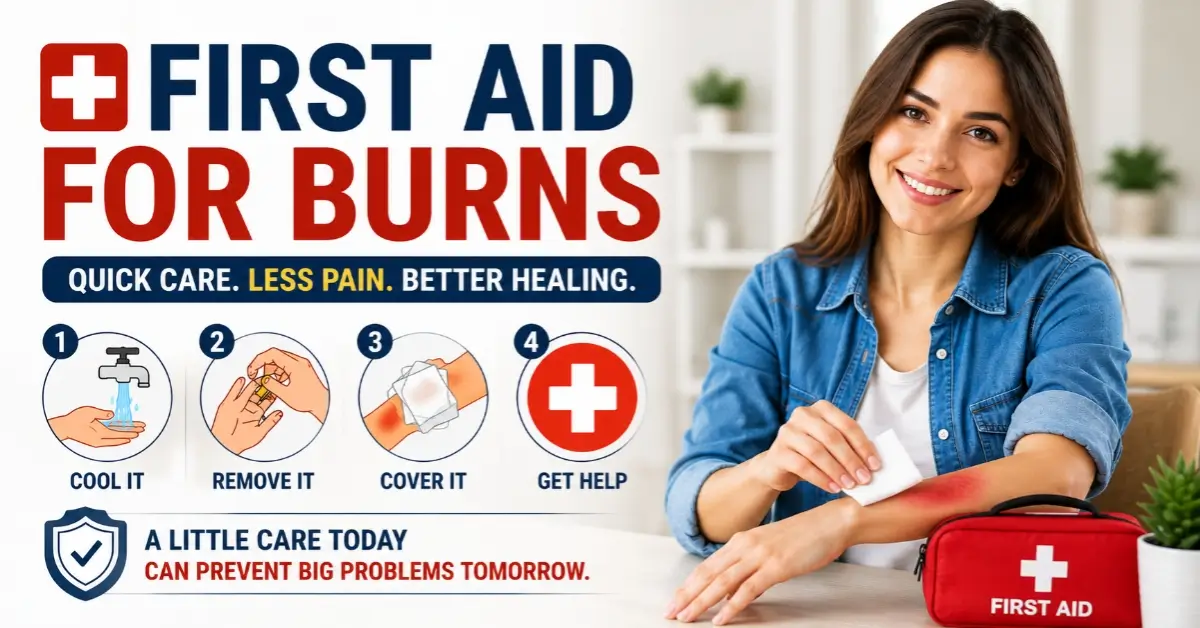
The first few moments after a burn are the most critical. The golden rule in first aid for burns is to cool the affected area with running cool (not ice-cold) water for at least 15 to 20 minutes. This helps reduce heat, pain, and swelling. Never apply ice, butter, oil, or toothpaste to burns—these can cause more damage. After cooling, gently remove any jewelry or tight clothing near the burned area, but never try to peel off anything stuck to the skin. Cover the burn with a clean, non-stick bandage or sterile cloth to protect it from infection. Avoid popping blisters, as they serve as natural protection. If the burn is larger than the size of your palm, affects the face, hands, feet, or genitals, or looks deep, seek immediate medical help. Quick action saves skin tissue, reduces scarring, and can even save lives. Proper first aid is not about fancy tools—it is about calmness, clarity, and correct steps applied at the right time.
Pain Relief and Recovery at Home
Minor burns can often be treated at home with the right care. After cooling and covering, pain relief is the next step. Over-the-counter medicines like paracetamol or ibuprofen help reduce pain and swelling. Aloe vera gel or doctor-recommended ointments can provide soothing relief and help the skin heal. Keeping the burn clean is essential—gently wash with mild soap and water before reapplying fresh bandages. Staying hydrated and eating nutrient-rich foods also promote recovery. Burns can take days or weeks to heal depending on severity, so patience is key. Sleep also plays a vital role in healing, as the body repairs itself during rest. For insights on how rest improves recovery, read our guide on Sleep Health. Recovery is not just about physical healing; emotional reassurance also helps. Encouraging words, empathy, and patience from family and friends make a big difference in how a patient feels during the recovery process.
Complications and When to See a Doctor
While minor burns heal naturally, some can lead to dangerous complications if not treated properly. Infections are the biggest risk—signs include pus, swelling, increased pain, or fever. Severe burns may also cause shock, dehydration, or long-term scarring. Burns on sensitive areas like the face or joints can affect movement and appearance. In such cases, professional medical care is essential. Doctors may prescribe antibiotics, give tetanus shots, or perform skin grafts for severe injuries. Ignoring burn complications can have life-long consequences. Another important point is that people with underlying health conditions, such as diabetes, are at higher risk because wounds heal more slowly. Stress and anxiety also play a role, as burn victims often feel trauma long after the physical wounds fade. To understand this psychological impact, you may explore our article on Anxiety Disorder. Knowing when to seek help can mean the difference between smooth recovery and permanent damage.
Emotional Impact of Burn Injuries
Burns are not just physical injuries—they leave emotional scars too. Victims often feel embarrassed about their appearance, especially if scars are visible. Some may withdraw from social life, fearing judgment. Anxiety and depression are common among burn survivors, and they need strong support systems to recover emotionally. Families play a key role in reassuring the patient and encouraging them through the healing process. Counseling and support groups are also effective, as they provide safe spaces for victims to share their experiences. Recovery is not just about skin—it is about confidence, identity, and self-worth. Healing emotionally is often slower than physical healing, but it is equally important. By treating both body and mind, survivors rebuild strength and hope. Friends and caregivers should remember that kind words, patience, and encouragement help victims restore their sense of normal life. True first aid for burns goes beyond bandages; it includes compassion and care for the whole person.
Burns in Children and Special Care
Children are particularly vulnerable to burn injuries because of their curiosity and limited understanding of danger. Hot drinks, boiling water, kitchen appliances, and electrical outlets are among the most common causes of burns in children. Even a small burn can be more serious in a child because their skin is thinner and more sensitive than an adult’s. Parents and caregivers should act quickly by cooling the burn under running water and seeking medical advice when necessary.
Prevention is especially important in homes with young children. Keep hot liquids out of reach, install safety covers on electrical outlets, and avoid carrying hot drinks while holding a child. Teaching age-appropriate safety habits can significantly reduce the risk of accidents. Children who experience severe burns may also require emotional reassurance because injuries can be frightening. Calm support from family members helps reduce anxiety and encourages recovery.
Workplace Burn Safety and Prevention
Many burn injuries occur in workplaces such as restaurants, factories, construction sites, and laboratories. Workers may encounter hot surfaces, chemicals, steam, electrical equipment, or open flames during routine tasks. Employers should provide proper training, protective clothing, and emergency response procedures to reduce risks. Safety signs and routine inspections also help identify hazards before accidents occur.
Employees should never ignore workplace safety rules. Wearing gloves, face protection, and heat-resistant clothing can prevent serious injuries. Regular first-aid training allows workers to respond quickly if accidents happen. A strong workplace safety culture protects employees, reduces lost workdays, and improves overall wellbeing. Burn prevention should always be part of occupational health and safety planning.
Emergency Preparedness and First Aid Knowledge
Burn emergencies often happen unexpectedly, which is why basic first-aid knowledge is valuable for everyone. Understanding how to respond during medical emergencies improves confidence and can reduce injury severity before professional help arrives. Families should keep a well-stocked first-aid kit at home and ensure that emergency contact numbers are easily available. Practicing emergency response plans also helps people stay calm under pressure.
Preparedness goes beyond burn injuries alone. Learning how to react to different emergencies builds stronger communities and improves survival outcomes. For example, recognizing the warning signs of serious medical events and responding quickly can save lives. You can learn more in our guide on First Aid for Stroke, which explains essential emergency response techniques that everyone should know.
Prevention: Reducing the Risk of Burns
The best first aid for burns is prevention. Many burn accidents can be avoided with simple safety habits. In the kitchen, keep handles of pots turned inward, use oven mitts, and never leave cooking unattended. Around the house, check electrical cords, keep lighters and matches away from children, and ensure smoke alarms are working. At work, follow safety protocols and wear protective equipment. During outdoor activities, protect your skin from sunburn with sunscreen and proper clothing. Prevention is not about fear—it is about awareness. By making small adjustments in daily routines, you can greatly reduce burn risks. Teaching children and family members basic safety steps also creates a culture of protection. Prevention is not always perfect, but it is the strongest shield against emergencies. Remember, avoiding a burn is always better than treating one, and safety should be part of everyday life.
Frequently Asked Questions (FAQ)
What should I never apply to a burn?
Never apply butter, toothpaste, oil, or ice directly to burns. These can worsen tissue damage and increase the risk of infection. Always use cool running water and clean dressings instead.
When should I seek emergency care for a burn?
Seek emergency care if the burn is larger than your palm, affects the face, hands, feet, or genitals, or shows signs of deep tissue damage. Severe burns should always be treated by medical professionals.
How long should I cool a burn with water?
Cool the burn under cool running water for at least 15 to 20 minutes. This helps reduce pain, swelling, and further skin damage.
Can minor burns be treated at home?
Yes. Most first-degree burns and some small second-degree burns can be treated at home with cool water, clean dressings, pain relief, and proper wound care. Seek medical attention if symptoms worsen.
What are the signs of a burn infection?
Signs include increased redness, swelling, pus, fever, worsening pain, and unpleasant odor from the wound. Consult a healthcare professional if these symptoms appear.