Early Signs of Dehydration in Children and How to Prevent It
Dehydration in children is more common than many parents realize, especially during hot weather, illness, or periods of increased physical activity. Since children’s bodies contain more water than adults, even a small loss of fluids can quickly affect their health. Recognizing the early signs of dehydration can help parents take action before it becomes a serious problem.
Understanding how dehydration develops and how to prevent it is essential for keeping your child healthy, active, and safe. Along with proper hydration, nutrition also plays an important role. You can also explore how child immune system boosting foods support overall health and energy levels.
What Causes Dehydration in Children?
Dehydration occurs when the body loses more fluids than it takes in. This can happen due to several reasons, including hot weather, fever, vomiting, diarrhea, or simply not drinking enough water throughout the day.

Active children who spend a lot of time playing outdoors are also at higher risk. When kids are busy, they may forget to drink water regularly. Parents should always encourage hydration, especially during physical activity or illness.
Early Signs of Dehydration in Children
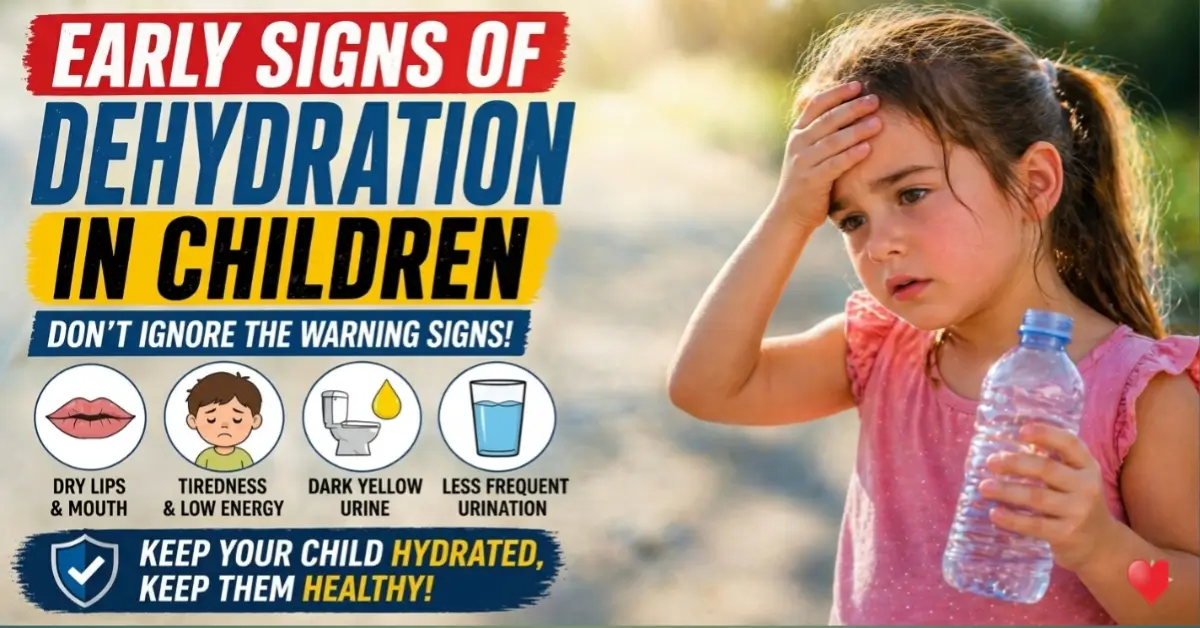
Recognizing early symptoms is key to preventing serious complications. Some common signs include:
Dry Lips and Mouth: One of the first noticeable signs is dryness in the lips and mouth.
Low Energy: Children may appear tired, weak, or less active than usual.
Dark Yellow Urine: A clear sign that the body needs more fluids.

Less Frequent Urination: If a child is not using the bathroom often, it may indicate dehydration.
Irritability: Dehydrated children may become unusually irritable or restless.
Parents should also pay attention to general health patterns. Issues like poor nutrition can also contribute to weakness, similar to signs of poor nutrition in children.
When Dehydration Becomes Serious
If dehydration is not addressed early, it can become severe. Signs of serious dehydration include:
Sunken eyes, extreme fatigue, rapid heartbeat, and dizziness. In such cases, immediate medical attention may be required. Parents should not ignore these warning signs.
In emergency situations, it is helpful to understand basic care methods, such as emergency first aid for children, to manage the situation until professional help is available.
How to Prevent Dehydration in Children
Preventing dehydration is easier than treating it. Simple daily habits can make a big difference.
Encourage Regular Water Intake: Make sure your child drinks water throughout the day, not just when they feel thirsty.
Offer Hydrating Foods: Fruits like watermelon, oranges, and cucumbers contain high water content.
Avoid Sugary Drinks: Sugary beverages can actually contribute to dehydration rather than prevent it.
Monitor During Illness: Children lose more fluids during fever or stomach issues, so hydration becomes even more important.
Maintaining a healthy daily routine is also important. You can also learn how daily emotional balance habits support overall well-being and reduce stress in children.
Best Drinks for Hydration
Water is always the best choice, but there are other options that can help:
Milk, natural fruit juices (in moderation), and oral rehydration solutions when needed. These options help restore lost fluids and maintain balance in the body.
Simple Daily Hydration Routine
Creating a routine can help children stay hydrated without thinking about it.
Give water after waking up, include fluids with meals, and encourage drinking after physical activity. Keeping a water bottle nearby can also remind children to drink regularly.
Conclusion
Dehydration in children can develop quickly, but it is easy to prevent with awareness and simple habits. Recognizing early signs like dry lips, low energy, and reduced urination can help parents take timely action.
By encouraging regular hydration, providing healthy foods, and maintaining a balanced routine, you can ensure your child stays healthy and active. Small daily steps can make a big difference in protecting your child’s overall well-being.
Frequently Asked Questions
What are the early signs of dehydration in children?
Early signs include dry lips, low energy, dark yellow urine, irritability, and reduced urination. These symptoms indicate the body needs more fluids.
How can I prevent dehydration in my child?
You can prevent dehydration by encouraging regular water intake, offering hydrating foods, and ensuring your child drinks fluids during physical activity and illness.
How much water should a child drink daily?
The amount varies by age, but children should drink water regularly throughout the day and increase intake during hot weather or physical activity.
Can dehydration make children feel tired?
Yes, dehydration can cause fatigue, weakness, and low energy levels in children because the body lacks enough fluids to function properly.
Are sugary drinks good for hydration?
No, sugary drinks can worsen dehydration. Water and natural fluids are the best choices for keeping children hydrated.
When should I seek medical help for dehydration?
If your child shows severe symptoms like dizziness, sunken eyes, or extreme fatigue, you should seek medical attention immediately.