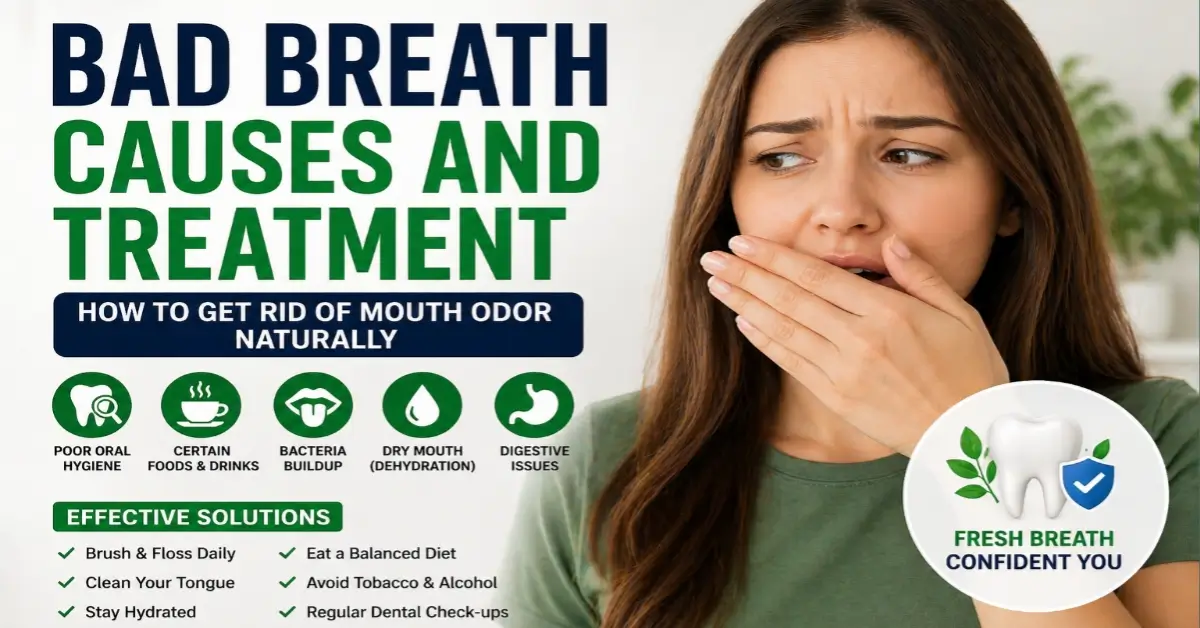
Bad Breath Causes and Treatment: How to Get Rid of Mouth Odor Naturally
Bad breath, also known as halitosis, is a common problem that can affect anyone. It can be embarrassing and may impact your confidence in social or professional situations. Understanding bad breath causes and treatment is the first step toward solving the problem effectively. In most cases, bad breath is linked to poor oral hygiene, but it can also be caused by diet, health conditions, or lifestyle habits.
The good news is that bad breath is usually treatable with simple daily habits and proper care. Whether it is caused by bacteria in the mouth, dry mouth, or certain foods, identifying the root cause can help you eliminate it permanently. This guide will explain everything you need to know about why bad breath happens and how to fix it.
Common Causes of Bad Breath
One of the main causes of bad breath is poor oral hygiene. When food particles remain in your mouth, bacteria break them down and produce unpleasant odors. Not brushing and flossing regularly allows this bacteria to build up, leading to persistent bad breath.
Another common cause is dry mouth. Saliva helps clean your mouth by removing food particles and bacteria. When your mouth is dry, bacteria grow more easily, causing odor. Smoking, dehydration, and certain medications can all contribute to dry mouth.
Your diet also plays a major role. Foods like garlic, onions, and spicy meals can cause temporary bad breath. These foods enter your bloodstream and affect your breath even after brushing. Additionally, poor eating habits can impact your overall health, similar to how balanced daily nutrient intake supports your body and prevents various health issues.

Health Conditions Linked to Bad Breath
Sometimes, bad breath is not just about oral hygiene. Certain medical conditions can also cause persistent mouth odor. Gum disease is one of the most common conditions associated with bad breath. It occurs when bacteria infect the gums, leading to inflammation and odor.
Digestive issues can also contribute to bad breath. Problems like acid reflux or stomach infections can cause unpleasant smells that come from deeper inside the body. Sinus infections and throat conditions may also lead to bad breath due to mucus buildup.
Chronic illnesses can affect overall health, which may indirectly cause bad breath. For example, people managing long-term conditions need proper routines, just like those explained in long term disease care routine, to maintain overall well-being including oral health.
Effective Treatments for Bad Breath
The most effective way to treat bad breath is to maintain good oral hygiene. Brush your teeth at least twice a day using fluoride toothpaste. Make sure to clean your tongue as well, since bacteria often accumulate there. Flossing daily helps remove food particles stuck between teeth.
Using mouthwash can also help kill bacteria and freshen your breath. However, it should not replace brushing and flossing. Drinking enough water throughout the day keeps your mouth hydrated and prevents dryness, which is a major cause of bad breath.
Regular dental checkups are important. Dentists can identify underlying issues such as cavities or gum disease that may be causing bad breath. Professional cleaning can remove plaque and bacteria that are difficult to eliminate at home.
Natural Remedies to Get Rid of Bad Breath
There are several natural remedies that can help improve breath odor. Drinking green tea is one of them, as it contains antioxidants that reduce bacteria in the mouth. Chewing sugar-free gum can also stimulate saliva production and help clean your mouth.
Eating fresh fruits and vegetables like apples, carrots, and celery can naturally clean your teeth and gums. These foods increase saliva flow and reduce bacteria buildup. Herbs like mint and parsley are also known for their breath-freshening properties.
Maintaining a healthy lifestyle is equally important. Avoid smoking and limit alcohol consumption, as both can dry out your mouth and worsen bad breath. A balanced diet not only supports your overall health but also helps maintain fresh breath.
How to Prevent Bad Breath Long-Term
Preventing bad breath requires consistency in your daily routine. Brush and floss regularly, stay hydrated, and maintain a healthy diet. Avoid skipping meals, as an empty stomach can sometimes lead to unpleasant breath.
It is also important to address any underlying health issues. If bad breath persists despite good oral hygiene, consult a doctor or dentist. Early detection of potential problems can help you avoid complications in the future.
Building simple habits into your daily routine can make a big difference. Just like other health improvements, small consistent actions lead to long-term results. Taking care of your oral health is not only about fresh breath but also about your overall well-being and confidence.
Frequently Asked Questions
What is the main cause of bad breath?
The most common cause of bad breath is poor oral hygiene. When food particles stay in your mouth, bacteria break them down and produce unpleasant odors.
How can I get rid of bad breath quickly?
You can get rid of bad breath quickly by brushing your teeth, cleaning your tongue, using mouthwash, and drinking plenty of water to keep your mouth hydrated.
Can bad breath be a sign of a health problem?
Yes, persistent bad breath can sometimes indicate underlying health issues such as gum disease, sinus infections, or digestive problems.
Does drinking water help with bad breath?
Yes, drinking water helps wash away food particles and bacteria while preventing dry mouth, which is a major cause of bad breath.
What foods help reduce bad breath?
Foods like apples, carrots, celery, and fresh herbs such as mint and parsley can help reduce bad breath naturally by increasing saliva production.
How can I prevent bad breath long-term?
Maintaining good oral hygiene, staying hydrated, eating a balanced diet, and visiting your dentist regularly are the best ways to prevent bad breath long-term.


