High Functioning Anxiety Symptoms
Many people living with anxiety do not appear emotionally overwhelmed on the outside. They continue going to work, meeting deadlines, managing responsibilities, maintaining relationships, and appearing productive in daily life. Because they seem successful, organized, and dependable, their anxiety often goes unnoticed by others. This is one reason why high functioning anxiety can be difficult to recognize early.
Unlike severe anxiety that clearly interrupts daily functioning, high functioning anxiety often hides behind achievement, perfectionism, overthinking, and constant productivity. Many adults quietly struggle with racing thoughts, emotional tension, fear of failure, and chronic stress while continuing to appear calm and capable externally.
Over time, however, ongoing anxiety can affect emotional wellbeing, sleep quality, focus, energy levels, and overall mental health. Recognizing these symptoms earlier may help people better understand how hidden anxiety patterns quietly affect daily life.
What Is High Functioning Anxiety?
When Anxiety Is Hidden Behind Productivity
High functioning anxiety is not always obvious because many individuals continue performing well in work, education, and relationships despite experiencing ongoing internal stress. People with hidden anxiety are often viewed as responsible, ambitious, organized, or highly motivated.
Internally, however, they may constantly feel mentally overwhelmed, emotionally tense, or fearful of making mistakes. Their productivity is sometimes driven by anxiety itself rather than confidence or emotional balance.
Because these individuals appear successful externally, their emotional struggles are frequently dismissed or overlooked. Many people silently normalize their anxiety symptoms for years without realizing how much emotional pressure they are carrying daily.
You can also explore why am I mentally exhausted all the time to understand how ongoing emotional pressure and hidden stress may gradually affect mental wellbeing.
Why High Functioning Anxiety Often Goes Unnoticed
One reason high functioning anxiety is difficult to recognize is because society often rewards behaviors linked to anxiety. Perfectionism, overworking, staying constantly busy, and overpreparing are frequently viewed as signs of dedication or success.
As a result, many people continue ignoring anxiety symptoms because they appear productive on the surface. Friends, coworkers, and even family members may not realize the person is struggling internally.
Some adults also avoid discussing anxiety because they fear appearing weak, dramatic, or incapable. Instead, they continue managing responsibilities while silently dealing with emotional tension and chronic overthinking.
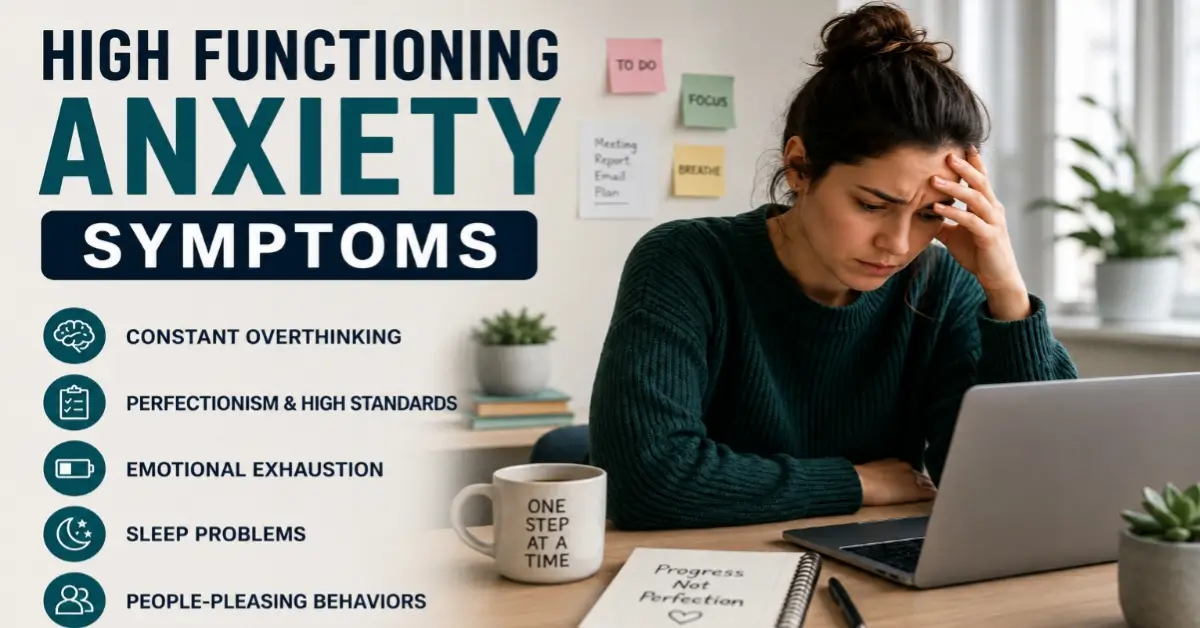
Common High Functioning Anxiety Symptoms
Constant Overthinking
Overthinking is one of the most common signs of high functioning anxiety. Many individuals continuously replay conversations, worry about future situations, or mentally prepare for worst-case scenarios.
The brain often remains active even during periods meant for relaxation. People may struggle turning their thoughts off at night, which can increase emotional fatigue and sleep problems over time.
Overthinking can also make decision-making emotionally exhausting because the mind constantly analyzes every possible outcome.
Fear Of Failure
Many adults with hidden anxiety place intense pressure on themselves to avoid mistakes. Even small failures or criticism may feel emotionally overwhelming because their self-worth becomes strongly connected to performance and achievement.
This fear of failure may lead to perfectionism, excessive preparation, or difficulty relaxing after completing responsibilities. Some people feel guilty resting because their mind constantly tells them they should be doing more.
Over time, this internal pressure may increase emotional exhaustion and mental fatigue.
Difficulty Relaxing
People experiencing high functioning anxiety often struggle relaxing fully, even during free time. Their mind may remain mentally active with responsibilities, worries, unfinished tasks, or future concerns.
Some individuals feel uncomfortable slowing down because constant productivity becomes emotionally connected to feeling safe or in control.
This ongoing mental tension may quietly increase emotional burnout over time.
You can also read signs you need a mental health break to better recognize when emotional stress and mental overload may be affecting daily wellbeing.
People-Pleasing Behaviors
Many adults with hidden anxiety constantly worry about disappointing others. They may struggle saying no, avoid conflict, or prioritize other people’s needs while ignoring their own emotional wellbeing.
This people-pleasing behavior often increases emotional exhaustion because individuals place ongoing pressure on themselves to maintain approval and avoid negative reactions.
Over time, constantly meeting everyone else’s expectations may leave very little emotional energy for personal recovery.
Physical Symptoms Of High Functioning Anxiety
Sleep Problems
Anxiety commonly affects sleep quality. Racing thoughts, emotional tension, and chronic worry can make it difficult to fully relax at night.
Some people struggle falling asleep, while others wake up frequently or feel mentally exhausted despite sleeping for several hours. Poor sleep may then increase emotional stress and make anxiety symptoms feel even stronger the next day.
Muscle Tension And Headaches
The body often physically responds to chronic anxiety. Many adults experience jaw tightness, headaches, shoulder tension, stomach discomfort, or general physical fatigue caused by prolonged emotional stress.
Because these physical symptoms develop gradually, people sometimes ignore them without realizing emotional stress may be contributing to the problem.
Constant Restlessness
Some individuals with high functioning anxiety feel internally restless most of the time. Even when sitting still, their mind may feel emotionally “busy” or unable to fully settle.
This constant mental activity can become emotionally draining over time and may contribute to long-term exhaustion.
How High Functioning Anxiety Affects Daily Life
Emotional Exhaustion
Many people with hidden anxiety eventually experience emotional burnout because they spend so much time mentally managing stress internally.
Although they may appear successful externally, their emotional energy slowly becomes depleted from constant overthinking, self-pressure, and emotional tension.
Over time, emotional exhaustion may affect motivation, patience, relationships, and overall mental wellbeing.
You can also explore signs of emotional burnout to understand how long-term emotional pressure may quietly affect mental health over time.
Difficulty Enjoying The Present Moment
Anxiety often keeps the mind focused on future worries, responsibilities, or possible problems. As a result, many individuals struggle fully enjoying the present moment because their thoughts remain mentally occupied.
Even during vacations, weekends, or social situations, some people continue mentally planning, worrying, or preparing for future responsibilities.
This ongoing mental pressure may gradually reduce emotional balance and increase stress levels.
Relationship Stress
Hidden anxiety can also affect relationships. Emotional exhaustion, overthinking, irritability, and constant worry may create communication difficulties or emotional distance over time.
Some people avoid discussing their anxiety because they fear burdening others or appearing emotionally weak. Unfortunately, silently carrying emotional stress often increases feelings of isolation.
Healthy Ways To Support Emotional Balance
Recognize Anxiety Patterns Early
The first step is recognizing that constant stress, overthinking, and emotional tension should not simply be accepted as normal. Awareness allows people to understand how anxiety may quietly affect their emotional wellbeing.
Create Better Boundaries
Many adults with hidden anxiety overcommit themselves emotionally and professionally. Learning to create healthier boundaries may help reduce emotional overload and improve recovery time.
Prioritize Rest And Sleep
Emotional recovery requires rest. Improving sleep routines, reducing screen exposure late at night, and creating healthier work-life balance may help support mental wellbeing.
You can also read how to manage stress naturally to explore healthy habits that may help reduce emotional stress and support better mental balance.
Talk Openly About Mental Health
Many people silently struggle with anxiety because they feel pressure to appear emotionally strong at all times. Talking openly with trusted friends, family members, or mental health professionals may help reduce emotional isolation and improve support.
When Anxiety Should Not Be Ignored
Occasional stress is a normal part of life, but ongoing anxiety that affects sleep, focus, relationships, emotional wellbeing, or daily happiness deserves attention. Many adults continue functioning normally while quietly struggling internally for long periods.
Recognizing high functioning anxiety symptoms earlier may help people understand when emotional support, healthier routines, and mental recovery become important instead of simply pushing through stress endlessly.
Sometimes the strongest thing a person can do is acknowledge that constant overthinking, emotional tension, and mental exhaustion are not things they need to silently carry forever. Awareness often becomes the first step toward healthier emotional balance and long-term wellbeing.
Frequently Asked Questions
What is high functioning anxiety?
High functioning anxiety describes ongoing anxiety symptoms in people who continue managing work, responsibilities, and daily life while silently struggling with emotional stress internally.
What are common high functioning anxiety symptoms?
Common symptoms include overthinking, perfectionism, emotional exhaustion, fear of failure, sleep problems, irritability, and difficulty relaxing.
Can successful people have anxiety?
Yes, many successful adults quietly experience hidden anxiety while appearing productive, organized, and emotionally stable on the outside.
How does overthinking affect mental health?
Constant overthinking may increase emotional stress, mental fatigue, sleep problems, and difficulty relaxing over time.
When should anxiety symptoms become a concern?
If anxiety begins affecting sleep, relationships, emotional wellbeing, focus, or daily functioning consistently, it may be important to seek support and healthier coping strategies.